Complex Medical and Technical Cave Rescue Workshop, Hungary May 5-10 2026.
In May 2026, doctors from Derbyshire, North Wales and Irish Cave Rescue attended an international cave rescue exercise, colloquially called ‘Stuck in Baradla’, in the Aggtelek region of Hungary. The exercise was hosted by the Hungarian Cave Rescue Service in the Baradla cave system in the Aggtelek National Park. It was attended by 20 cave rescue doctors and paramedics, as well as over 40 cave rescue team members from 17 countries across Europe and beyond.
The exercise was developed out of discussions at the Medical Committee of the European Cave Rescue Association, of which BCRC is a member. There have been some large, complex medical cave rescues over the last several years (Riesending in Germany in 2014, Ogof Ffynnon Ddu in Wales in 2021, and Morca in Turkey in 2023). While these incidents are fortunately rare, the extended nature of the casualty care is very challenging, and the intention was to simulate a prolonged rescue and allow cross-team learning.
The idea for the exercise was developed by Dr Denes Nagy (Hungarian Cave Rescue and ECRA Medical Committee chair) and Dr Brendan Sloan (BCRC and ECRA Medical Committee vice-chair), supported by Sandor Zsolt (Hungarian Cave Rescue) who organised the technical elements. After some pre-exercise recreational caving around Budapest, the attendees congregated in Aggtelek, a small village in northern Hungary, and the location of the Baradla-Domica cave system. This 25km system is a UNESCO World Heritage site, and we are very grateful to the National Park for its support.
The attendees were split into 5 teams, with 4 medics and a support team of technical personnel. Each team was then presented with a rescue scenario, involving complex medical treatment and decision making, with the teams having to transport in their equipment. The medical personnel also camped in the cave for 3 nights, helping to familiarise themselves with the prolonged underground durations of challenging rescues. Mornings were dedicated to teaching and discussion sessions, before scenarios each afternoon and evening debriefing. The teams were deliberately mixed between countries and experience, to allow the greatest degree of learning for all involved.
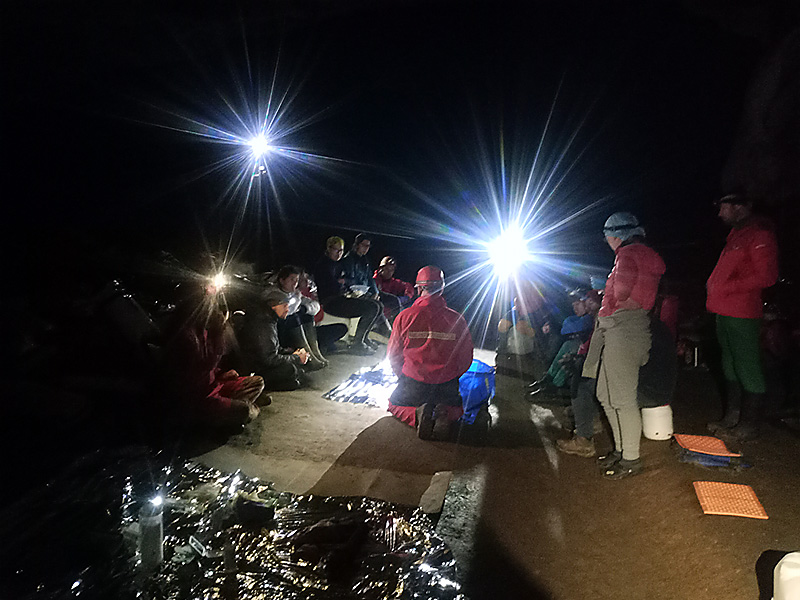
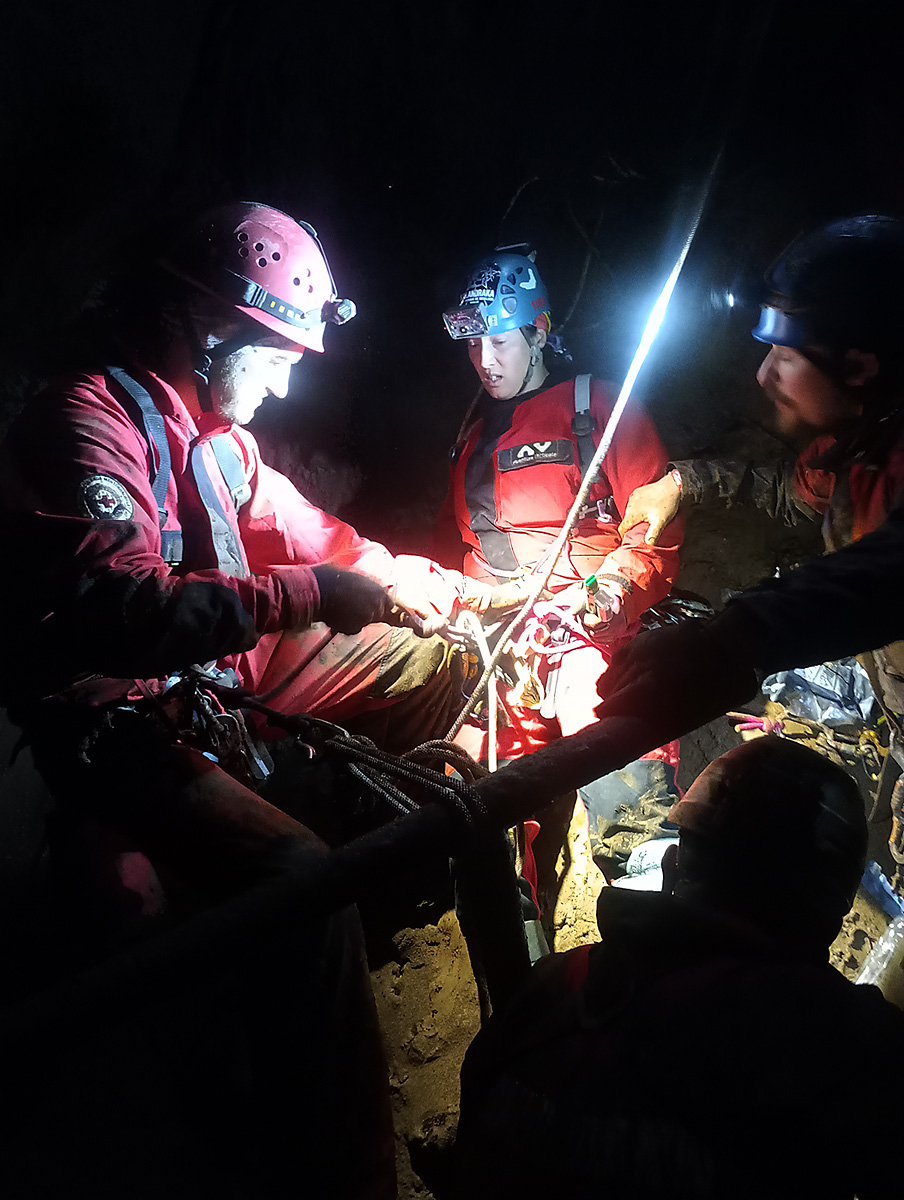
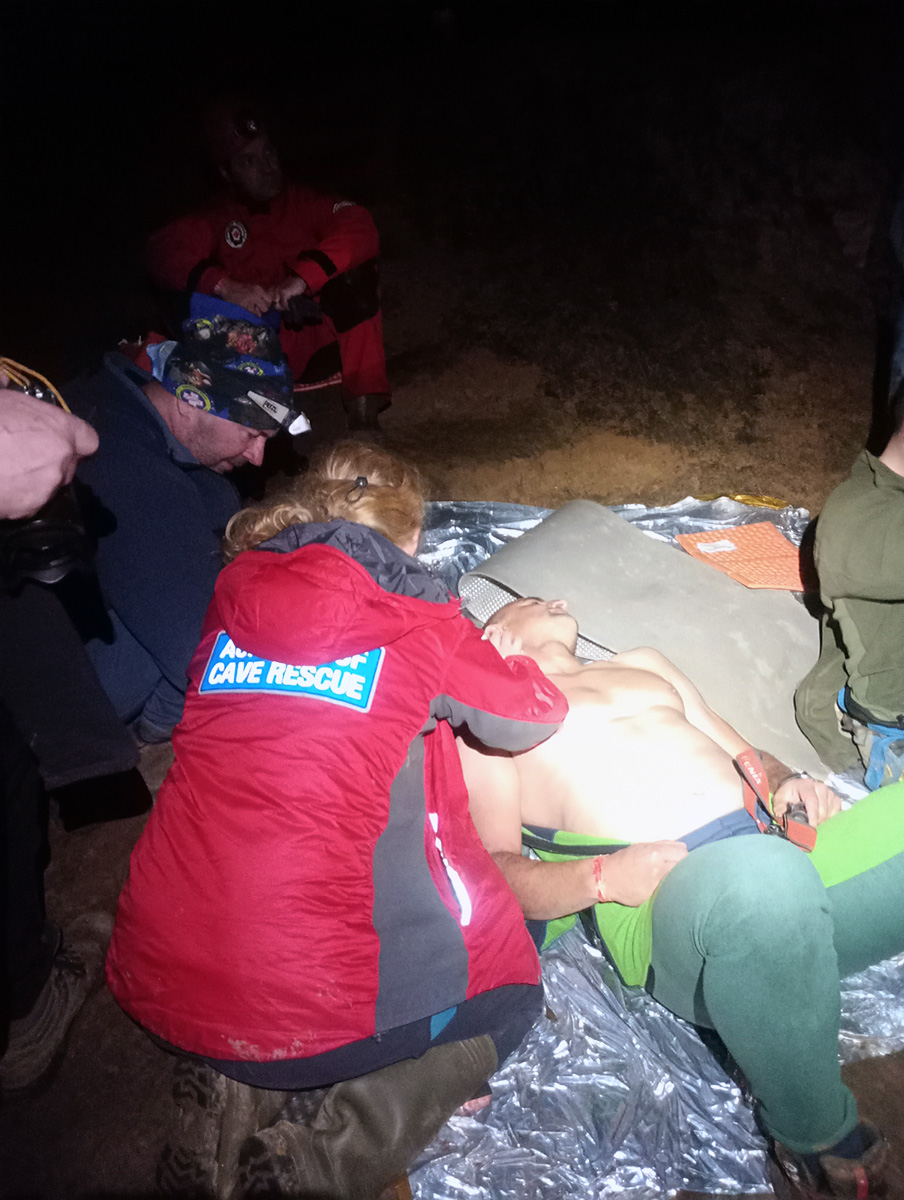
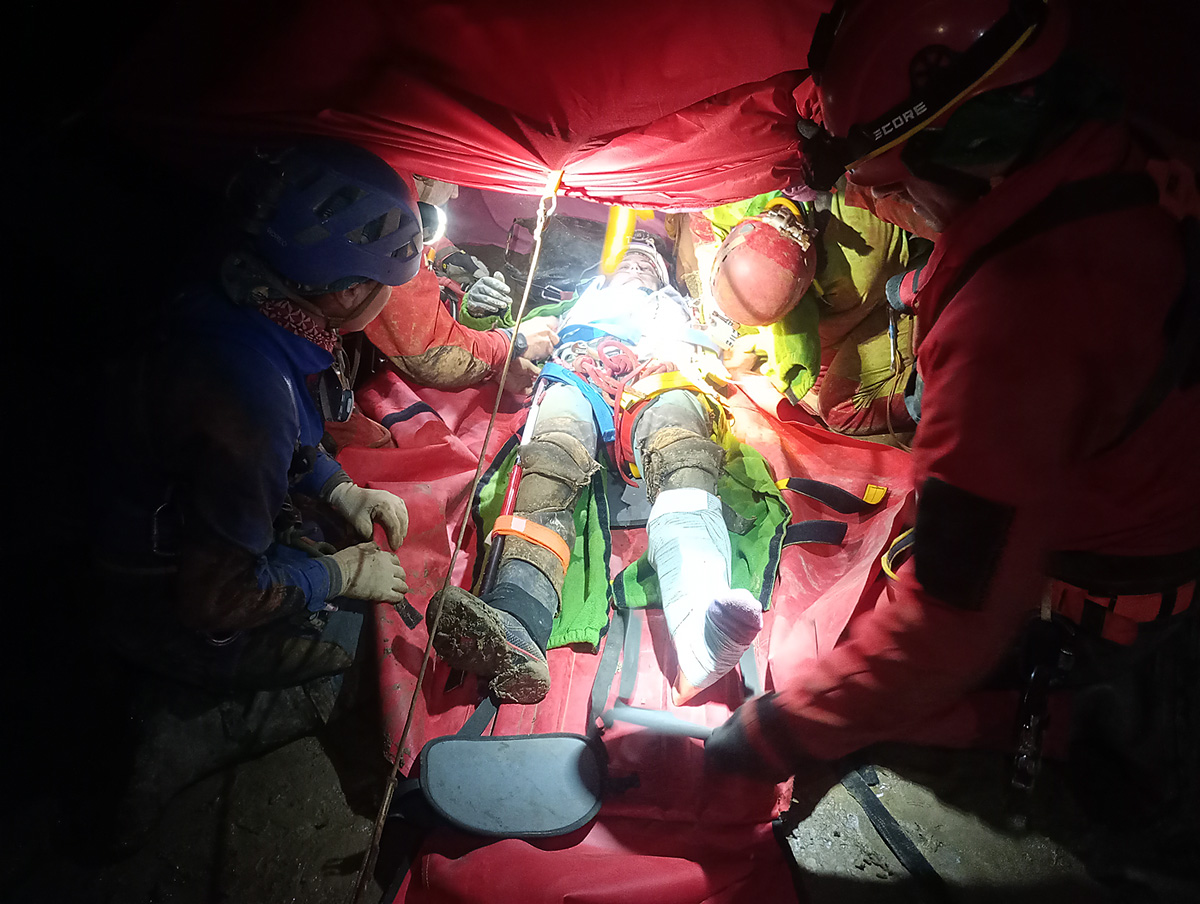
There was also plenty of time to build friendships and relax, aided by the hospitality of the Hungarian hosts. Feedback from the attendees was universally positive, and there are plans to run a similar, albeit shorter event preceding the ECRA conference in Slovenia in October 2026.
Dr Brendan Sloan
Medical Officer for the British Cave Rescue Council